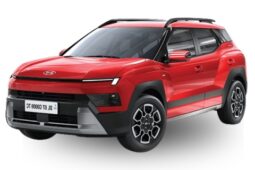
Hyundai Bayon Price in India, Specifications, Features, Mileage and Variants
The Hyundai Bayon is a new SUV positioned below the Hyundai Creta in the Indian market. Launched on 26 October 2026, it brings together a 1.5-litre petrol engine, a choice of manual and automatic transmissions, a technology-focused cabin and a long list of comfort and safety features. With an introductory ex-showroom price of ₹10 lakh, the Bayon targets buyers who want a feature-rich SUV without moving into a higher price bracket.
The Bayon stands out with its dual 12.3-inch displays, ventilated front seats, panoramic sunroof, connected-car technology and available Level 2 ADAS. Its 505-litre boot and 2,600mm wheelbase are also important considerations for families looking for everyday practicality.
In this detailed guide, we cover the Hyundai Bayon price in India, engine specifications, dimensions, features, safety equipment, expected mileage, variants and key things buyers should know before purchasing the SUV.
Hyundai Bayon: Key Specifications
| Specification | Hyundai Bayon Details |
|---|---|
| Starting ex-showroom price | ₹10 lakh |
| Top variant ex-showroom price | ₹18.15 lakh |
| Engine | 1.5-litre naturally aspirated petrol |
| Maximum power | 115hp |
| Maximum torque | 144Nm |
| Transmission options | 6-speed manual and iVT automatic (CVT) |
| Fuel type at launch | Petrol |
| CNG option | Reported for a later launch |
| Length | 4,245mm |
| Width | 1,810mm |
| Height | 1,605mm with roof rails |
| Wheelbase | 2,600mm |
| Ground clearance | 205mm, unladen |
| Boot space | 505 litres |
| Fuel tank capacity | 43 litres |
| Turning radius | 5.16 metres |
| Infotainment screen | 12.3-inch touchscreen |
| Digital instrument cluster | 12.3 inches |
| Standard airbags | Six |
| Advanced driver assistance | Level 2 ADAS on higher variants |
Specifications are based on the supplied launch information. Feature availability may vary by variant.
Hyundai Bayon Price in India
The Hyundai Bayon price starts at ₹10 lakh ex-showroom for the base HX2 MT variant and goes up to ₹18.15 lakh for the top-spec HX10 Dual Tone iVT variant. The SUV is available with a manual gearbox and an iVT automatic transmission, allowing buyers to choose according to their driving preferences.
The supplied price information also lists Delhi on-road prices ranging from ₹11.15 lakh to ₹21.06 lakh. The final on-road price depends on the selected variant, registration charges, insurance and other applicable costs.
Hyundai Bayon Price: Base, Mid and Top Variants
| Variant | Transmission | Ex-showroom price |
|---|---|---|
| HX2 MT | Manual | ₹10.00 lakh |
| HX6 iVT | Automatic | ₹14.97 lakh |
| HX10 Dual Tone iVT | Automatic | ₹18.15 lakh |
Hyundai Bayon Variant-Wise On-Road Price in Delhi
| Variant or variant group | Number of variants listed | Reported on-road price |
|---|---|---|
| Bayon HX2 | 1 | ₹11.15 lakh |
| Bayon HX3 | 1 | ₹12.65 lakh |
| Bayon CNG | 1 | ₹13.48 lakh |
| Bayon HX3 Plus | 1 | ₹13.69 lakh |
| Bayon HX5 | 4 | ₹14.45 lakh–₹16.24 lakh |
| Bayon HX6 | 4 | ₹15.75 lakh–₹17.54 lakh |
| Bayon HX8 | 4 | ₹17.52 lakh–₹19.37 lakh |
| Bayon HX10 | 4 | ₹19.32 lakh–₹21.06 lakh |
Note: The supplied information mixes ex-showroom and on-road pricing and does not provide a complete, consistent price list for every variant. The variant-group prices above should be verified with the dealer before making a purchase. The CNG variant is reported as a future offering, so its availability should also be confirmed.
Which Hyundai Bayon Variant Should You Consider?
| Buyer preference | Variant or transmission to consider | Why it may suit you |
|---|---|---|
| Lower purchase budget | HX2 MT | The entry-level variant has the lowest stated ex-showroom price. |
| Regular city driving | iVT automatic | The CVT-style transmission avoids frequent manual gear changes in traffic. |
| More comfort features | Higher variants | Features such as ventilated seats and a panoramic sunroof are offered in the range. |
| Advanced technology | Higher variants with ADAS | These offer additional driver-assistance and convenience equipment. |
| Sportier driving experience | iVT automatic | Paddle shifters, drive modes and Dash Boost Mode add flexibility. |
Before choosing a variant, check the exact equipment list, transmission availability and final on-road quotation. A feature mentioned for the overall model range may not be included in every version.
Hyundai Bayon Engine and Performance
The Hyundai Bayon uses a 1.5-litre, four-cylinder, naturally aspirated petrol engine producing 115hp and 144Nm of torque. Buyers can choose between a six-speed manual gearbox and an iVT automatic transmission, which uses CVT technology.
The naturally aspirated engine focuses on everyday usability rather than the higher peak output associated with turbocharged powertrains. It should appeal to buyers looking for a conventional petrol SUV for daily commuting, family journeys and regular highway use.
Hyundai Bayon Engine Specifications
| Engine detail | Specification |
|---|---|
| Engine capacity | 1.5 litres |
| Engine configuration | Four-cylinder, naturally aspirated petrol |
| Maximum power | 115hp |
| Maximum torque | 144Nm |
| Manual transmission | 6-speed |
| Automatic transmission | iVT (CVT) |
| Drive modes | Eco, Normal and Sport |
| Paddle shifters | Available with iVT |
| Idle Stop and Go | Listed among the features |
| Turbo-petrol engine | Not listed at launch |
| Diesel engine | Not listed at launch |
What Is the Hyundai Bayon iVT Automatic Like?
The iVT automatic is intended for buyers who spend considerable time in city traffic. Its continuously variable transmission design allows it to operate without the conventional fixed gear changes of a traditional automatic gearbox.
The automatic version also offers paddle shifters and Eco, Normal and Sport driving modes. These allow the driver to adjust the driving response according to traffic and personal preference.
The reported Dash Boost Mode provides an additional power response when the accelerator is pressed firmly. However, its actual performance benefit, acceleration figures and overtaking ability need to be assessed through a road test.
Hyundai Bayon Mileage
The supplied information does not include an official, certified fuel-efficiency figure for the Hyundai Bayon. It would therefore be premature to quote a specific mileage number or promise a particular real-world fuel economy.
The Bayon uses a 1.5-litre naturally aspirated petrol engine and is offered with manual and automatic gearbox options. Actual fuel consumption can differ according to traffic conditions, driving style, air-conditioning use, road quality and vehicle load.
Hyundai Bayon Mileage: What Buyers Should Know
| Factor | What it means for buyers |
|---|---|
| Engine | The 1.5-litre naturally aspirated petrol engine is designed for everyday use. |
| Transmission | Manual and iVT automatic versions may return different real-world efficiency figures. |
| Eco mode | Helps tailor the driving response towards efficiency. |
| City driving | Frequent stops and slow traffic can increase fuel consumption. |
| Highway driving | Steady speeds and smoother acceleration can improve efficiency. |
| Official mileage | A confirmed figure is not available in the supplied information. |
| Real-world mileage | Should be evaluated after independent road testing and owner usage reports become available. |
Buyers comparing the Bayon with other petrol SUVs should wait for certified fuel-efficiency figures and independent road-test results rather than relying on unverified mileage claims.
Hyundai Bayon Exterior Design
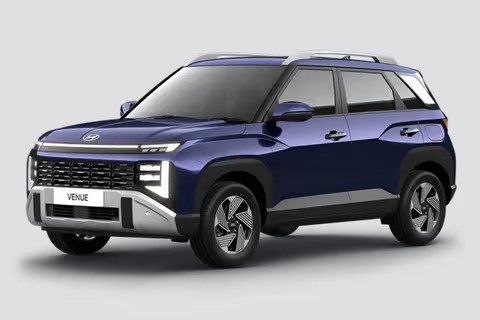
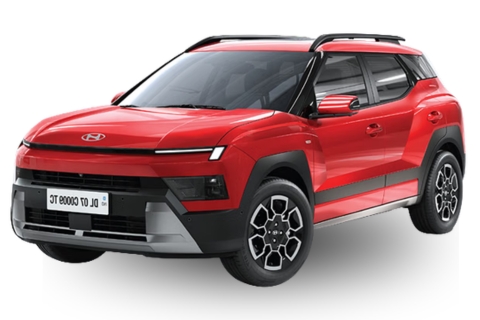
The Hyundai Bayon introduces the brand's “Art of Steel” design language. Its styling combines slim LED daytime running lights, projector headlamps, pronounced wheel arches and contrasting body cladding to create a modern SUV appearance.
At the front, the slim DRLs are integrated into the upper lighting design, while the main headlamps sit lower on the bumper. The 17-inch petal-style alloy wheels and bridge-type roof rails add visual detail along the sides. At the rear, slim LED tail-lamps, a roof spoiler and a dual-tone bumper complete the look.
Hyundai Bayon Exterior Features
| Exterior feature | Details |
|---|---|
| Design language | Hyundai Art of Steel |
| Headlamps | LED projector headlamps |
| Daytime running lights | Slim LED DRLs that also serve as turn indicators |
| Alloy wheels | 17-inch petal-style design |
| Wheel arches | Flared arches with black cladding |
| Roof rails | Bridge-type design |
| Rear lighting | Slim LED tail-lamps |
| Roof spoiler | Integrated stop lamp |
| Rear bumper | Dual-tone black-and-silver treatment |
| Overall styling | Modern crossover-inspired SUV design |
The Bayon's styling is intended to give it a distinct identity within Hyundai's SUV range. Its exterior design may appeal to buyers who prefer a vehicle with a more upright, rugged appearance than a conventional hatchback or sedan.
Hyundai Bayon Interior and Comfort
The Bayon has a technology-focused dashboard built around two 12.3-inch displays: a digital instrument cluster and a touchscreen infotainment system. The cabin combines a modern screen layout with physical shortcut buttons, steering-wheel controls and a separate climate-control panel.
This combination matters because drivers do not have to rely entirely on the touchscreen for every adjustment. The reported Black and Olive Grey leatherette upholstery also gives the cabin a contemporary appearance.
Hyundai Bayon Interior Features
| Interior category | Features |
|---|---|
| Instrument cluster | 12.3-inch digital display |
| Infotainment | 12.3-inch curved touchscreen |
| Navigation | ccNC navigation system |
| Smartphone connectivity | Wireless Android Auto and Apple CarPlay |
| Audio system | Bose premium sound system |
| Music streaming | JioSaavn integration |
| Front seats | Ventilated seats on equipped variants |
| Driver's seat | Eight-way electric adjustment on equipped variants |
| Sunroof | Panoramic sunroof; an electric sunroof is also listed as an option |
| Climate control | Fully automatic climate control |
| Rear passengers | Rear AC vents and centre armrest |
| Rear seat | Two-step reclining function |
| Charging | Wireless charger and Type-C USB ports |
| Convenience | Smart key and push-button start |
| Cabin ambience | Ambient lighting and multiple instrument-cluster themes |
| Seat upholstery | Black and Olive Grey leatherette theme |
Is the Hyundai Bayon Suitable for Families?
The Bayon's 2,600mm wheelbase and 505-litre boot are useful starting points for buyers considering it as a family vehicle. The rear centre armrest, reclining rear seat, rear AC vents and USB charging ports are also practical additions for passengers.
However, the boot capacity alone does not establish how comfortable the rear seats are. Rear legroom, headroom, seat cushioning and ease of entry should be assessed in person before buying, particularly if the car will regularly carry adults in the back.
Hyundai Bayon Technology and Connected Features
Technology is one of the Bayon's main talking points. The SUV is reported to feature Hyundai's generative AI voice assistant in India, alongside Bluelink connected-car technology and over-the-air software updates.
According to the supplied information, the AI assistant can understand conversational requests and help with tasks such as trip planning, restaurant suggestions, and weather, news and sports updates. The generative AI assistant is reported to operate in English, while embedded voice commands support Hindi, English, Hinglish, Bengali, Tamil and Telugu.
Hyundai Bayon Technology Features
| Technology | What it offers |
|---|---|
| Generative AI voice assistant | Conversational voice-based assistance |
| Embedded voice commands | More than 500 commands, reported to work without an internet connection |
| Bluelink | More than 70 connected-car features |
| Over-the-air updates | Updates for up to 19 controllers, according to the supplied information |
| Bluelink subscription | Three years of complimentary access is reported |
| Digital instrument display | Three themes: Classic, Modern and Simple |
| Ambient sound options | Ten nature-sound options |
| Infotainment | Wireless Android Auto and Apple CarPlay |
| Navigation | Integrated ccNC navigation |
| Regional-language support | Ten regional languages plus English and Korean are reported for the screens |
The distinction between the conversational AI assistant and embedded voice commands is important. Their language support and internet requirements are not necessarily identical. Buyers should confirm which functions are available in their preferred language and whether particular services require connectivity or a subscription.
Hyundai Bayon Safety Features
The Bayon is reported to offer six airbags as standard across the range, along with electronic stability control, ABS with EBD, hill-start assist, ISOFIX mounts and three-point seatbelts for all seats.
Higher variants add a Level 2 ADAS package called Hyundai SmartSense Level 2 Pro, reported to include 23 functions. Other listed equipment includes a 360-degree camera, blind-spot view monitoring, front parking sensors, a tyre pressure monitoring system and an electronic parking brake with auto hold.
Hyundai Bayon Safety Equipment
| Safety category | Features |
|---|---|
| Airbags | Six airbags reported as standard |
| Braking | ABS with EBD |
| Stability assistance | Electronic stability control |
| Hill assistance | Hill-start assist |
| Child-seat mounting | ISOFIX |
| Seatbelts | Three-point seatbelts for all seats |
| Additional protection | Rollover sensor and immobiliser |
| Parking assistance | 360-degree camera and front parking sensors |
| Blind-spot assistance | Blind-spot view monitor |
| Tyre monitoring | TPMS |
| Parking brake | Electronic parking brake with auto hold |
| Brakes | Disc brakes on all four wheels |
| Advanced driver assistance | Level 2 ADAS on higher variants |
| Body structure | Reported to use 69% advanced high-strength steel |
| Crash-test rating | Bharat NCAP result not yet confirmed in the supplied information |
Does the Hyundai Bayon Have a 5-Star Safety Rating?
The available information says Hyundai has engineered the Bayon's Global K Enhanced platform with Indian crash-test standards in mind and that Bharat NCAP results are expected. This is not the same as receiving an official five-star rating.
Until a published crash-test result becomes available, buyers should consider the six-airbag provision and listed safety equipment separately from the vehicle's final crash-test performance.
What Should You Know About ADAS?
The higher variants are reported to include Highway Driving Assist and navigation-based cruise control, but these functions are limited to designated expressways. Advanced driver assistance systems are designed to support the driver, not replace attention or safe driving practices.
Their performance can also depend on road markings, traffic, weather and system limitations. Buyers should understand the operating conditions before relying on these features.
Hyundai Bayon Dimensions and Practicality
The Hyundai Bayon measures 4,245mm in length and has a 2,600mm wheelbase. Its reported 205mm unladen ground clearance and 505-litre boot capacity are relevant to Indian buyers dealing with uneven roads, family luggage and everyday commuting.
Hyundai Bayon Dimensions
| Dimension or capacity | Measurement |
|---|---|
| Length | 4,245mm |
| Width | 1,810mm |
| Height, including roof rails | 1,605mm |
| Wheelbase | 2,600mm |
| Unladen ground clearance | 205mm |
| Boot space | 505 litres |
| Fuel tank | 43 litres |
| Turning radius | 5.16 metres |
| Rear seat split | 60:40 |
The 505-litre boot should provide useful luggage capacity on paper, while the 60:40 split rear seat adds flexibility when carrying a mix of passengers and larger items. The 5.16-metre turning radius may also help when manoeuvring through narrower streets or parking areas.
Actual usability will depend on the shape of the boot, the rear-seat folding arrangement and the vehicle's performance on uneven surfaces. These aspects are best checked during a physical inspection and test drive.
Hyundai Bayon: Who Should Buy It?
The Bayon is aimed at buyers who want a modern SUV with a strong feature list, connected technology and practical family-car proportions. Its appeal will depend on the final variant pricing and how much equipment is included at each price point.
| Type of buyer | Why the Bayon may be suitable | What to consider |
|---|---|---|
| Buyers looking between smaller and larger SUVs | Its 4.2-metre length positions it as a middle-ground option in the supplied lineup description. | Compare cabin space and prices with the Venue and Creta. |
| Feature-focused buyers | Dual 12.3-inch screens, ventilated seats and a Bose system are listed. | Confirm which features are available on the chosen variant. |
| City commuters | The iVT automatic, 360-degree camera and reported 5.16-metre turning radius may help with everyday driving. | Test the transmission and visibility in traffic. |
| Safety-conscious families | Six airbags and electronic stability control are reported as standard. | Check the official crash-test result when published. |
| Technology enthusiasts | The AI voice assistant, Bluelink and OTA updates are major highlights. | Verify language support and connectivity requirements. |
| Buyers needing luggage space | The reported 505-litre boot offers a useful headline capacity. | Inspect the boot and rear-seat flexibility in person. |
| Manual transmission buyers | The six-speed manual offers a conventional gearbox option. | Test clutch feel and gear shifts before deciding. |
Hyundai Bayon vs Rivals
The supplied launch information identifies the Maruti Suzuki Victoris, Maruti Suzuki Grand Vitara, Kia Seltos, Tata Sierra, Honda Elevate, Skoda Kushaq, Volkswagen Taigun and MG Astor as potential rivals.
These vehicles differ in size, engine options, features and pricing. A fair comparison should use the exact variant, transmission, fuel type and price rather than comparing only the starting prices of each model.
| Rival model | What to compare with the Bayon |
|---|---|
| Maruti Suzuki Victoris | Variant pricing, powertrain choices, features and running costs |
| Maruti Suzuki Grand Vitara | Petrol and alternative-fuel options, cabin practicality and efficiency |
| Kia Seltos | Infotainment, comfort features, engine options and ADAS availability |
| Tata Sierra | Dimensions, equipment, powertrain options and safety information |
| Honda Elevate | Naturally aspirated petrol performance, cabin space and usability |
| Skoda Kushaq | Engine performance, transmission and ride-and-handling characteristics |
| Volkswagen Taigun | Powertrain options, driving experience and variant value |
| MG Astor | Connected features, cabin technology and overall equipment |
The best choice will depend on the features that matter most to you. Buyers prioritising an automatic gearbox and technology may evaluate the Bayon's iVT and connected features closely, while those focused on fuel economy or performance should wait for comparable verified figures across the shortlisted vehicles.
Hyundai Bayon Pros and Cons
A balanced assessment should distinguish between the features listed on paper and the qualities that can only be established through testing.
| Potential advantages | Points to consider |
|---|---|
| 115hp petrol engine with manual and automatic options | Certified fuel-efficiency figures are not provided in the supplied information. |
| Dual 12.3-inch displays | The complete feature list varies by variant. |
| Ventilated seats and panoramic sunroof on equipped versions | These features may require a more expensive variant. |
| Six airbags reported as standard | The official Bharat NCAP result is not confirmed in the supplied information. |
| 505-litre boot capacity | Practical luggage space should be checked in person. |
| Connected-car technology and AI voice assistant | Some functions may depend on connectivity, language or subscription conditions. |
| Level 2 ADAS on higher variants | Certain functions have operating limitations and do not replace attentive driving. |
Frequently Asked Questions About the Hyundai Bayon
1. What is the Hyundai Bayon price in India?
The supplied launch information lists an ex-showroom starting price of ₹10 lakh for the HX2 MT and ₹18.15 lakh for the HX10 Dual Tone iVT at the top of the range. Confirm the latest dealer price before booking.
2. Which engine does the Hyundai Bayon use?
The Bayon is reported to use a 1.5-litre naturally aspirated petrol engine producing 115hp and 144Nm of torque.
3. Is the Hyundai Bayon available with an automatic gearbox?
Yes. The supplied specifications list a six-speed manual gearbox and an iVT automatic transmission using CVT technology.
4. What is the Hyundai Bayon mileage?
An official fuel-efficiency figure is not included in the supplied information. Wait for certified figures and independent real-world testing before comparing mileage with rivals.
5. Does the Hyundai Bayon have a CNG option?
The supplied launch information says the Bayon is petrol-only at launch and reports a CNG version for a later date. Its availability and specifications should be confirmed with Hyundai.
6. What is the boot space of the Hyundai Bayon?
The reported boot capacity is 505 litres. The SUV also has 60:40 split rear seats for added flexibility.
7. Does the Hyundai Bayon offer a sunroof?
Yes. A panoramic sunroof is listed among the features, while an electric sunroof is also mentioned as an alternative. Check the selected variant's equipment list.
8. Does the Hyundai Bayon get ADAS?
Higher variants are reported to offer Hyundai SmartSense Level 2 Pro ADAS with 23 functions. The availability and operating limits of individual features should be checked before purchase.
9. Does the Hyundai Bayon have a five-star Bharat NCAP rating?
The supplied information does not confirm an achieved five-star rating. It says the platform is engineered with crash-test standards in mind and that Bharat NCAP results are expected.
10. Is the Hyundai Bayon suitable for city driving?
Its available iVT automatic transmission, 360-degree camera and reported 5.16-metre turning radius may make it suitable for urban use. A test drive is the best way to assess visibility, ride comfort and manoeuvrability.
11. What is the wheelbase of the Hyundai Bayon?
The reported wheelbase is 2,600mm. Rear-seat comfort should still be assessed in person because wheelbase alone does not establish passenger space.
12. Which cars compete with the Hyundai Bayon?
The supplied information lists the Maruti Suzuki Victoris, Grand Vitara, Kia Seltos, Tata Sierra, Honda Elevate, Skoda Kushaq, Volkswagen Taigun and MG Astor as potential rivals.
Final Verdict
The Hyundai Bayon brings together a 1.5-litre petrol engine, manual and iVT automatic transmissions, a modern dual-screen cabin and a substantial list of comfort and safety equipment. Its reported 505-litre boot, six airbags and available Level 2 ADAS make it worth considering for buyers looking for a technology-focused SUV.
However, the purchase decision should not be based on the feature list alone. Official mileage figures, independent driving impressions, the published crash-test result and a verified variant-wise price list will help establish its real-world value.
If you are considering the Hyundai Bayon, compare the exact variant with similarly priced alternatives, take a test drive and confirm the final on-road quotation before booking.